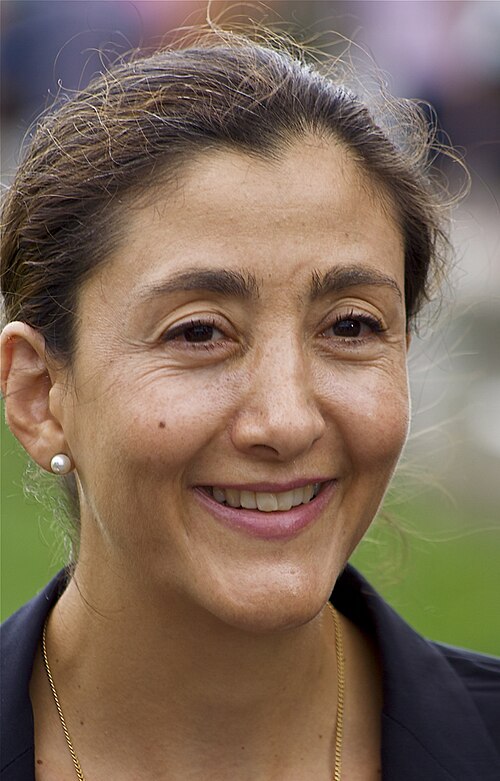
Ingrid Betancourt: Unpacking Her Estimated $500K Net Worth and Defining Colombian-French Roots
Ingrid Betancourt Pulecio stands as a figure of remarkable resilience and profound influence in both Colombian and international politics. Her life story is a tapestry woven with threads of political ambition, intellectual pursuit, unimaginable adversity, and unwavering spirit. From a privileged upbringing in Bogotá to the harrowing ordeal of a six-year FARC captivity, Betancourt has navigated an extraordinary path that has captivated the world. While her public life has been dominated by her political career and the dramatic circumstances of her kidnapping and rescue, many are curious about the financial standing of such a prominent global figure. This article delves into Ingrid Betancourt's estimated net worth, exploring the various facets of her life that have contributed to her financial profile, alongside her deeply intertwined Colombian and French heritage.
Unpacking Ingrid Betancourt's Estimated Net Worth: Around $500,000
According to various financial estimations, including reliable public sources, Ingrid Betancourt holds an estimated net worth of approximately $500,000. It's crucial to understand that net worth figures for public figures, especially those whose primary career is in politics or activism, can be complex to pin down precisely. Unlike entrepreneurs or corporate executives with clear revenue streams and asset declarations, a politician's wealth often derives from a combination of public sector salaries, speaking engagements, book deals, and perhaps personal investments over a lifetime.
For someone of Betancourt's stature, this half-million-dollar figure likely reflects a lifetime of earnings rather than a single, high-income event. Her career trajectory, which includes advisory roles in government, terms in both the House of Representatives and the Senate in Colombia, and later, her high-profile status as a survivor and advocate, would have provided a consistent, albeit not extravagant, income stream.
Understanding the Components of a Politician's Net Worth:
*
Government Salaries: As a former Representative and Senator in Colombia, Betancourt would have earned a public salary, which, while respectable, is generally not in the range of corporate executive compensation.
*
Advisory Roles: Her early career included advising government ministers, which also comes with a professional salary.
*
Post-Captivity Activities: Following her dramatic rescue, Betancourt gained immense international recognition. This often translates into opportunities for:
*
Public Speaking Engagements: High-profile individuals are frequently invited to speak at conferences, universities, and private events, commanding fees that can range significantly.
*
Book Deals: Writing memoirs or autobiographical accounts of extraordinary experiences is a common avenue for income for survivors of high-profile events. While specific book deals aren't detailed in the reference context, it's a very likely source of income for someone with her story.
*
Advocacy Work: While often philanthropic, some advocacy roles can be compensated.
*
Awards and Honors: While prestigious, awards like the Legion d'honneur and the Prince of Asturias Award are generally honorary and do not carry significant monetary value directly impacting net worth.
*
Investments and Assets: Like any individual, personal investments, property, and other assets would contribute to the overall net worth.
It's also worth noting the controversial request for monetary compensation in 2010 under Colombian victim protection law, which she later withdrew. This suggests that while there was an opportunity for a substantial sum, it was not pursued, impacting what her net worth *could* have been. The decision to withdraw, likely influenced by public outcry, highlights the unique scrutiny public figures face regarding personal gain from their suffering. This context provides a fascinating glimpse into the complex financial landscape of a public servant and survivor. You can delve deeper into her financial journey and political career here:
Ingrid Betancourt: Net Worth, Political Career, and Kidnapping Story.
From Bogota to Oxford: A Life Forged in Politics and Academia
Ingrid Betancourt Pulecio was born on December 25, 1961, in Bogotá, D.C., Colombia, into a family deeply embedded in the nation's political and social fabric. Her early life was shaped by a unique blend of Colombian culture and international exposure, largely due to her parents' distinguished careers. Her father, Gabriel Betancourt, served as Colombia's Minister of Education and later as a high-ranking official at UNESCO, an organization promoting global collaboration. Her mother, Yolanda Pulecio, was not only a former beauty queen but also a congresswoman, demonstrating a blend of public service and grace. This upbringing instilled in Ingrid a profound understanding of public life, policy, and the complexities of governance from a young age.
Her intellectual journey mirrored her cosmopolitan background. Betancourt pursued higher education at prestigious institutions in Europe, specifically attending the Institut d’Etudes Politiques de Paris (Sciences Po), a renowned center for political science and international relations. This foundational education in France solidified her deep connection to French culture and intellectual thought. In 1983, her marriage to Fabrice Delloye not only brought two children into her life but also granted her French citizenship, formally cementing her dual Colombian-French identity – a heritage that would become central to her public persona and international appeal.
Beyond her initial studies, Betancourt continued her academic pursuits, later attending Harris Manchester College, Oxford. In a testament to her enduring intellectual curiosity and resilience, she remarkably earned a Doctor of Philosophy in Theology from Oxford in 2023. This pursuit of advanced knowledge, decades after her initial political career and the traumatic kidnapping, speaks volumes about her dedication to intellectual growth and spiritual reflection, showcasing a dimension of her personality often overshadowed by her political struggles.
A Political Career Defined by Courage and Adversity
Ingrid Betancourt's political career began in the early 1990s, where she quickly established herself as a formidable force against corruption, a pervasive issue in Colombian politics. She served as an advisor to the Minister of Finance and the Minister of Foreign Trade, gaining valuable experience in economic policy and international relations. Her commitment to transparency and social justice resonated with the Colombian electorate, leading to her election to the House of Representatives in 1994. Her effectiveness and principled stance saw her ascend to the Colombian Senate in 1998, further solidifying her reputation as a dedicated public servant.
Her political ambitions reached their peak in 2002 when she declared her candidacy for the Colombian presidency as a member of the Oxygen Green Party. Campaigning on an anti-corruption platform, Betancourt was traveling in a FARC-controlled zone despite warnings from the government, believing it was essential to connect directly with the electorate. It was during this campaign that her life took an unimaginable turn.
The Ordeal and Rescue:
In February 2002, Ingrid Betancourt was kidnapped by the Revolutionary Armed Forces of Colombia (FARC), a Marxist-Leninist guerrilla group. What followed was a harrowing six-year period of captivity in the dense Colombian jungle, an experience that captured global attention and sparked international campaigns for her release. During her time as a hostage, she endured unimaginable hardship, isolation, and constant threat.
Her ordeal finally ended on July 2, 2008, when Colombian security forces executed "Operation Jaque," a daring and meticulously planned military intelligence operation. This mission successfully rescued Betancourt and 14 other hostages, including three American contractors, without a single shot being fired. The rescue was hailed as a monumental triumph, bringing an end to years of uncertainty and suffering. For a detailed account of this incredible journey, read more here:
The Extraordinary Journey of Ingrid Betancourt: From FARC Kidnapping to Freedom.
Post-Captivity and Recognition:
Upon her release, Betancourt was instantly transformed into a global symbol of resilience and human rights. She received numerous prestigious awards recognizing her courage and the international outrage her captivity had generated. These included:
*
The Legion d'honneur: France's highest order of merit, bestowed upon her in recognition of her enduring courage and her French citizenship.
*
The Concord Prince of Asturias Award: A prestigious Spanish award celebrating individuals or organizations who have made significant contributions to international understanding.
Despite the accolades, her post-captivity life also saw moments of controversy, such as her decision in 2010 to request monetary compensation from the Colombian state under a victim of terrorism protection law. While legally permissible, the claim, citing the psychological damage and lost earnings from her captivity, drew significant public criticism in Colombia and was subsequently withdrawn. This episode highlighted the complex moral and ethical dimensions public figures navigate, especially those who have suffered immensely.
Personal Life and Enduring Influence
Ingrid Betancourt's personal life, like her political career, has been marked by significant events. Her first marriage to Fabrice Delloye in 1983, which provided her with French citizenship, resulted in two children. This marriage later ended in divorce. She then married Juan Carlos Lecompte in 1997, a union that lasted until 2011. The intersection of her personal relationships with her public and traumatic experiences has made her story even more compelling, often explored in her own writings and interviews.
Beyond the political arena, Betancourt continues to be an active voice, particularly as an anti-corruption activist and advocate for human rights. Her unique experiences provide her with an unparalleled perspective on conflict, freedom, and the resilience of the human spirit. She frequently engages in public discourse, drawing on her past to inform discussions on peace, democracy, and the challenges facing societies emerging from conflict. Her intellectual pursuits, culminating in her recent PhD from Oxford, further underscore her commitment to contributing to knowledge and understanding beyond immediate political objectives.
Her journey stands as a powerful testament to the multifaceted nature of a public figure's life – balancing political ambition, academic rigor, personal triumphs and tribulations, and the enduring impact of profound adversity.
Conclusion
Ingrid Betancourt's life narrative is an extraordinary chronicle of courage, intellect, and survival. From her roots in a politically prominent Colombian family with strong French ties, through her ascent in national politics, to the harrowing six years as a FARC hostage, and her eventual triumphant rescue, she has embodied an unyielding spirit. Her estimated net worth of $500,000, while a point of factual interest, represents a career dedicated to public service and advocacy rather than a pursuit of vast personal wealth. It is a reflection of a life lived intensely in the public eye, often under extreme pressure, and consistently driven by a commitment to her beliefs.
As a Colombian-French politician, activist, and now a Doctor of Philosophy, Ingrid Betancourt continues to inspire and provoke thought, reminding us of the enduring power of resilience and the ongoing struggle for freedom and justice in a complex world. Her story remains a vital chapter in modern history, a powerful reminder of the human capacity to overcome adversity and contribute meaningfully to society.